When people think about the artificial intelligence revolution, companies like OpenAI, Nvidia, and Google usually come to mind. But behind every AI model, chatbot, and data center is another technology quietly driving this transformation: memory chips.
Samsung, the world’s largest memory chip manufacturer, is experiencing one of the biggest growth periods in its history thanks to the explosive demand for AI infrastructure. As companies race to build powerful AI models, they also need enormous amounts of high-speed memory, and Samsung is supplying a significant portion of it.
The result is what industry experts are calling the AI Memory Boom, a trend that is reshaping the semiconductor industry and pushing Samsung to record-breaking financial performance.
AI Is Creating a New Memory Supercycle
Artificial Intelligence models require far more memory than traditional computing systems.
Every AI request, whether it is generating text, creating images, or training a large language model, relies on massive amounts of DRAM and High-Bandwidth Memory (HBM) working alongside powerful GPUs. As AI data centers continue expanding worldwide, demand for advanced memory has skyrocketed.
Unlike previous semiconductor cycles that were driven mainly by smartphones or personal computers, this new growth is fueled by AI infrastructure, making it a long-term opportunity rather than a short-term trend.
Samsung’s Record-Breaking Performance
Samsung’s latest financial results clearly show the impact of AI demand.
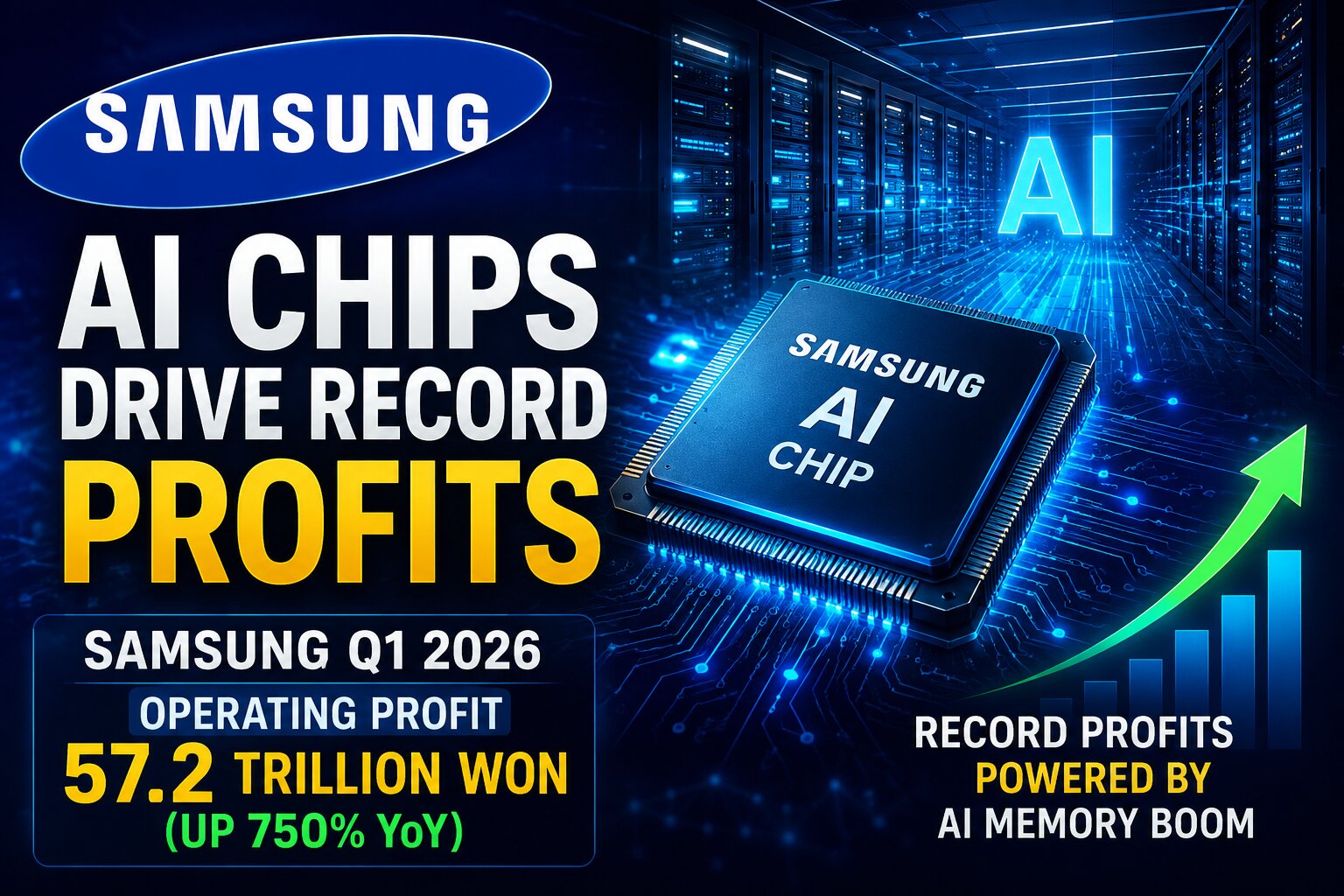
During the first quarter of 2026, the company reported its highest quarterly operating profit in history, driven primarily by its semiconductor business.
| Financial Metric | Q1 2026 |
|---|---|
| Revenue | 133.9 trillion won |
| Operating Profit | 57.2 trillion won |
| Net Profit | 47.1 trillion won |
| Memory Division Operating Profit | 53.7 trillion won |
| Estimated AI Investment by Customers | Hundreds of billions of dollars |
These numbers highlight one important fact: Samsung’s memory division has become the company’s biggest growth engine because of AI demand.
Why High-Bandwidth Memory (HBM) Matters
One of the biggest reasons behind Samsung’s success is High-Bandwidth Memory, commonly known as HBM.
Unlike traditional memory chips, HBM is designed specifically for AI workloads. It provides extremely high data transfer speeds while consuming less power, making it ideal for AI accelerators such as those used in modern data centers.
Samsung’s HBM business is growing rapidly.
Industry reports indicate that revenue from HBM has already increased dramatically compared with last year, and demand is expected to continue rising as companies build larger AI data centers. The next generation, HBM4, is expected to become one of Samsung’s most valuable products, powering future AI servers and advanced computing systems.
AI Is Changing the Semiconductor Industry
The AI boom is proving that success in artificial intelligence is not just about building smarter chatbots or better software. Behind every AI model are thousands of GPUs, processors, networking systems, and memory chips working together. As AI models become larger and more capable, memory bandwidth is becoming just as important as processing power.
This is why companies like Samsung are now considered essential players in the global AI ecosystem, even though they do not build AI chatbots themselves. Simply put, no advanced AI system can operate efficiently without fast, reliable memory.
Samsung’s Long-Term Strategy
Samsung is treating this AI boom as more than a temporary opportunity.
The company is reportedly pursuing long-term supply agreements with major AI customers while expanding production of high-value products such as HBM, server DRAM, and AI-optimized memory solutions.
By securing multi-year contracts and increasing manufacturing capacity, Samsung aims to remain one of the world’s leading suppliers for the next generation of AI infrastructure.
At the same time, the company continues investing heavily in research and development to stay ahead in advanced memory technology.
What This Means for the Future
The rapid growth of AI has created an entirely new competition in the semiconductor industry.
While Nvidia dominates AI processors, Samsung is emerging as one of the biggest beneficiaries of the growing demand for advanced memory.
This trend also highlights a larger shift.
The future of artificial intelligence will depend not only on software and algorithms but also on the hardware that powers them.
Memory chips, AI processors, advanced packaging, and cloud infrastructure will all play equally important roles.
As AI adoption continues to accelerate across industries, companies that provide these critical technologies are likely to remain at the center of the AI revolution.
Final Thoughts
Samsung’s record profits are more than just impressive financial results. They reflect a major transformation taking place across the technology industry.
Artificial intelligence is creating unprecedented demand for computing power, and that demand is driving the biggest memory boom the semiconductor industry has seen in years.
For investors, developers, and technology enthusiasts, one message is becoming increasingly clear:
The future of AI is not powered by software alone. It is built on the chips, memory, and infrastructure working behind the scenes.
Related Reading
If you’re interested in how AI hardware is evolving, you can also link readers to your previous article: