Anthropic is reportedly partnering with Samsung to develop custom AI chips. Discover how this could reduce NVIDIA dependence and reshape AI hardware.
Artificial intelligence is evolving at an unprecedented pace, and the competition among AI companies is no longer limited to developing smarter language models. The next major battleground is AI hardware. According to recent reports, Anthropic, the company behind the Claude AI assistant, is in discussions with Samsung Electronics to develop custom AI chips. While neither company has officially confirmed the partnership, the news has sparked significant interest across the technology industry.
If the collaboration becomes a reality, it could reduce Anthropic’s dependence on NVIDIA GPUs, improve the efficiency of its AI models, and intensify competition in the rapidly growing AI semiconductor market.
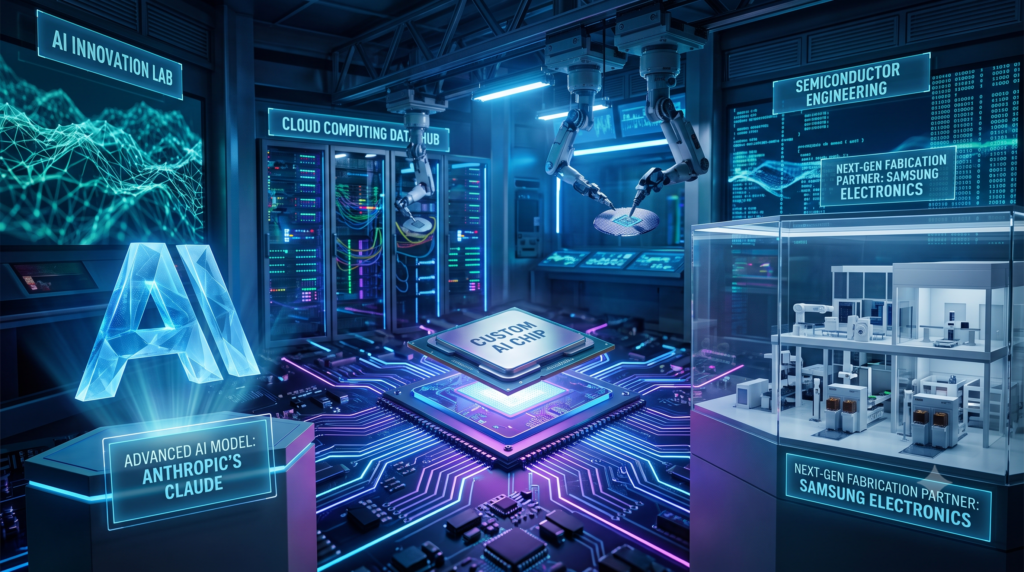
Why Are AI Companies Building Custom Chips?
Modern AI models require enormous computing power to train and operate. Large language models like Claude, ChatGPT, and Gemini process billions of parameters, demanding specialized hardware capable of handling massive workloads.
For years, NVIDIA has dominated the AI hardware industry with its high-performance GPUs. However, the explosive growth of generative AI has created supply shortages and significantly increased infrastructure costs.
To address these challenges, leading AI companies are investing in custom-designed processors that are optimized specifically for their workloads. Custom chips can deliver better performance, lower power consumption, reduced operational costs, and greater control over future AI development.
Anthropic appears to be following this industry trend by exploring its own AI silicon strategy.
Why Samsung Could Be the Right Manufacturing Partner?
Samsung Electronics is one of the world’s largest semiconductor manufacturers and has invested billions of dollars in advanced chip fabrication technologies. While TSMC currently leads the global foundry market, Samsung continues expanding its capabilities in manufacturing cutting-edge processors.
Reports suggest that Anthropic is evaluating Samsung’s foundry services for producing its custom AI chips. Partnering with Samsung could provide Anthropic access to advanced manufacturing processes while helping Samsung strengthen its position in the rapidly expanding AI chip ecosystem.
Although discussions are reportedly still in the early stages, such a partnership would benefit both companies if finalized.
Reducing Dependence on NVIDIA
One of the biggest reasons AI companies are designing their own chips is to reduce dependence on NVIDIA.
NVIDIA GPUs remain the industry standard for training and deploying AI models, but demand has far exceeded supply over the past few years. This has increased hardware costs and created longer procurement timelines for many AI developers.
Custom AI chips would allow Anthropic to:
- Optimize hardware specifically for Claude AI models.
- Reduce long-term infrastructure expenses.
- Improve inference speed and energy efficiency.
- Increase flexibility in scaling future AI systems.
- Minimize risks associated with GPU shortages.
Rather than replacing NVIDIA completely, custom chips could complement existing GPU infrastructure by handling specific AI workloads more efficiently.
Anthropic Is Following a Growing Industry Trend
Anthropic is not the only company investing in custom AI hardware. Several major technology companies have already developed specialized processors for artificial intelligence.
Anthropic is not the only company investing in custom AI hardware. Several major technology companies have already developed specialized processors for artificial intelligence.
These companies recognize that controlling both software and hardware creates significant competitive advantages. Designing chips specifically for proprietary AI models enables better optimization, improved performance, and lower operating costs.
If Anthropic joins this group, it would further validate the industry’s shift toward vertically integrated AI ecosystems.
What Could This Mean for the AI Industry?
The reported partnership between Anthropic and Samsung could have far-reaching implications for the AI industry.
First, it would increase competition in AI hardware development, encouraging innovation beyond NVIDIA’s ecosystem.
Second, more AI companies could begin investing in proprietary silicon, leading to faster technological advancements and improved hardware efficiency.
Third, cloud providers may benefit from diversified hardware options, reducing dependence on a single GPU supplier.
Finally, businesses using AI services could eventually experience lower costs, faster response times, and more reliable infrastructure as competition drives innovation.
Although these outcomes remain speculative until the project becomes official, the overall direction reflects a broader transformation occurring across the AI industry.
What We Know So Far
At present, only limited information has been reported about the project.
Current reports indicate that discussions between Anthropic and Samsung are still in the early stages. There is no confirmed production timeline, chip architecture, launch date, or official announcement from either company.
Anthropic has also indicated that it intends to continue using a diversified hardware strategy involving cloud providers and existing GPU infrastructure while exploring future opportunities.
As with many early-stage technology partnerships, additional details are expected only if formal agreements are reached.
The Future of AI Is About More Than Software
For years, AI innovation focused primarily on building larger and more capable language models. Today, the conversation has expanded to include the hardware powering those models.
Companies increasingly recognize that controlling both AI software and AI hardware offers long-term strategic advantages. Faster chips, lower energy consumption, and optimized computing architectures will become essential as AI systems continue growing in complexity.
If Anthropic successfully develops custom AI chips with Samsung, it could mark another important milestone in the evolution of artificial intelligence infrastructure.
Whether or not this specific partnership moves forward, one thing is becoming increasingly clear: the future leaders in artificial intelligence will likely be those who innovate across both software and semiconductor technology.

2 thoughts on “Anthropic Reportedly Developing Custom AI Chips with Samsung to Challenge Nvidia”