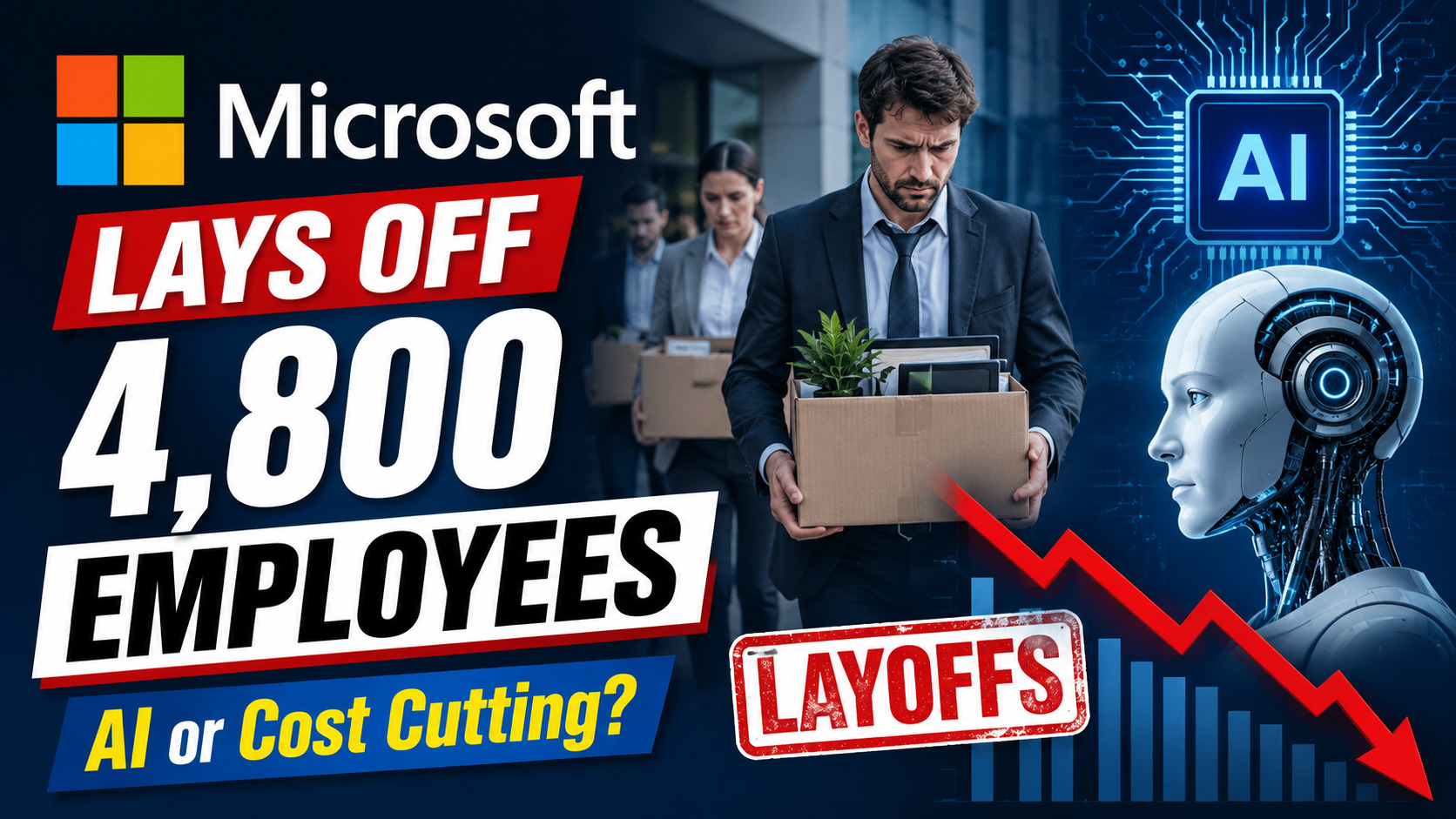
Microsoft has announced a major restructuring, cutting 4,800 jobs about 2.1% of its global workforce with its Xbox gaming division taking the biggest hit. The move comes after years of heavy investment in gaming and AI, and signals a clear shift in how the company wants to allocate money, talent, and focus. Rather than a simple cost-cutting exercise, this looks like a strategic reset: trim slower‑growth, underperforming areas to keep funding massive AI and cloud bets.
What Exactly Is Microsoft Cutting?
The headline number is 4,800 jobs, but the deeper story is inside Xbox. Around 3,200 roles will be eliminated from the Xbox unit alone, roughly one‑fifth of its workforce, with 1,600 people laid off immediately and the rest exiting over fiscal 2027. That means Xbox will be in a year‑long restructuring, not a one‑day shock.
As part of this reset, four well‑known gaming studios are being spun out of Microsoft. Compulsion Games and Double Fine Productions will become independent again, while Ninja Theory and Undead Labs are moving to new ownership. Arkane Studios, which is working on a Blade game, is still exploring options with its works council in France. In practical terms, Microsoft is shrinking its first‑party studio footprint and signaling that it no longer wants to own as much of the traditional console pipeline end‑to‑end.
These cuts don’t only hit creative teams. Microsoft is also trimming roles in commercial units that sell to customers, on top of earlier voluntary retirement programs offered to about 7% of its U.S. workforce. A significant share of those eligible had already opted to leave, and this latest round pushes the workforce reduction further.
Why Now? AI Spending Up, Xbox Under Pressure
The timing tells you a lot. While Microsoft is cutting in gaming and other slower‑growing segments, its AI and cloud spending is exploding. The company has laid out roughly $190 billion in projected spending for 2026, with a big chunk going into data centers and AI infrastructure. Azure has been growing strongly thanks to AI demand and its long‑running partnership with OpenAI, but the capex to support that growth is massive.
At the same time, not all of Microsoft’s traditional businesses are performing well. Windows licenses, Surface hardware, and Xbox revenue have been under pressure. Despite the blockbuster Activision Blizzard acquisition and years of Xbox investment, Microsoft still trails Sony and Nintendo in the console business, and the economics of exclusives-plus-hardware are getting tougher. Even though Xbox has been pushing more titles across platforms and subscriptions, revenue shrinkage and hardware softness make it harder to justify a large, expensive in‑house studio network.
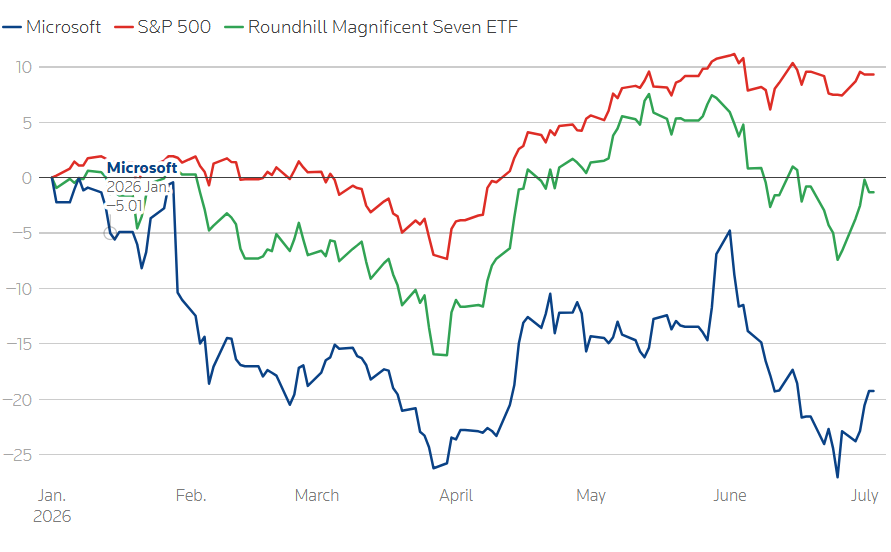
Investors have noticed. Microsoft’s stock is down close to 20% this year, making it the worst performer among the mega cap tech names in 2026 so far. That’s a big reversal for a company that used to be one of the market’s safest AI plays. Analysts worry that generative AI might cannibalize parts of Microsoft’s software business and that the company hasn’t clearly explained how its own models and AI services will turn into large, profitable businesses at scale.
Against that backdrop, the layoff decision looks less like panic and more like portfolio rebalancing: scale back where returns are weak, keep funding AI infrastructure and cloud growth.
Is AI Replacing These Workers?
One of the most striking parts of the internal messaging is the explicit line: “the roles eliminated today are not being replaced by AI.” Microsoft’s Chief People Officer emphasizes that while AI isn’t directly swapping in for these jobs, it is changing how work gets done and which skills are valuable.
That nuance matters. On one hand, Microsoft is joining a broader pattern across Big Tech Amazon and Meta have also laid off thousands this year while pouring billions into AI. On the other hand, the company is careful not to frame this as “we fired people because AI can do their jobs now,” which would send a dangerous message to both employees and enterprise customers. Instead, the official explanation is that AI is automating parts of workflows, so both the company and its clients need to reskill and reorganize around new tools and processes.
From a business perspective, the logic is clear: if AI is driving the next wave of cloud demand, you want as much of your operating budget as possible going into GPUs, data centers, and AI R&D not into struggling hardware lines or underperforming divisions.
What Xbox’s Future Might Look Like
For Xbox, this is the sharpest reset in years. By spinning out or selling studios and cutting one‑fifth of staff, Microsoft is effectively admitting that its earlier strategy big acquisitions, a huge first‑party portfolio, and a pure console war with Sony is not delivering the right return.
Going forward, you can expect:
- A leaner Xbox organization focused on platforms, services, and key franchises instead of a sprawling studio empire.
- More multiplatform game releases and fewer purely console‑exclusive mega‑bets.
- Tighter integration between Xbox and Microsoft’s broader AI stack from in game AI tools to cloud‑based gaming services.
Analysts are already asking whether Microsoft should spin off Xbox entirely. While that’s speculative for now, this restructuring makes such a move easier in the future by carving out clear boundaries and shedding assets that don’t fit a more focused, service‑oriented strategy.

One thought on “Microsoft’s 4,800 Layoffs: What the Xbox Reset Really Means in the AI Era”