Artificial intelligence has already transformed how we search for information, create content, write code, and interact with digital assistants. But the next major leap in AI won’t happen on our screens; it will happen in the physical world. Welcome to the era of physical AI, where intelligent robots can see, think, move, and interact with their environment just like humans.
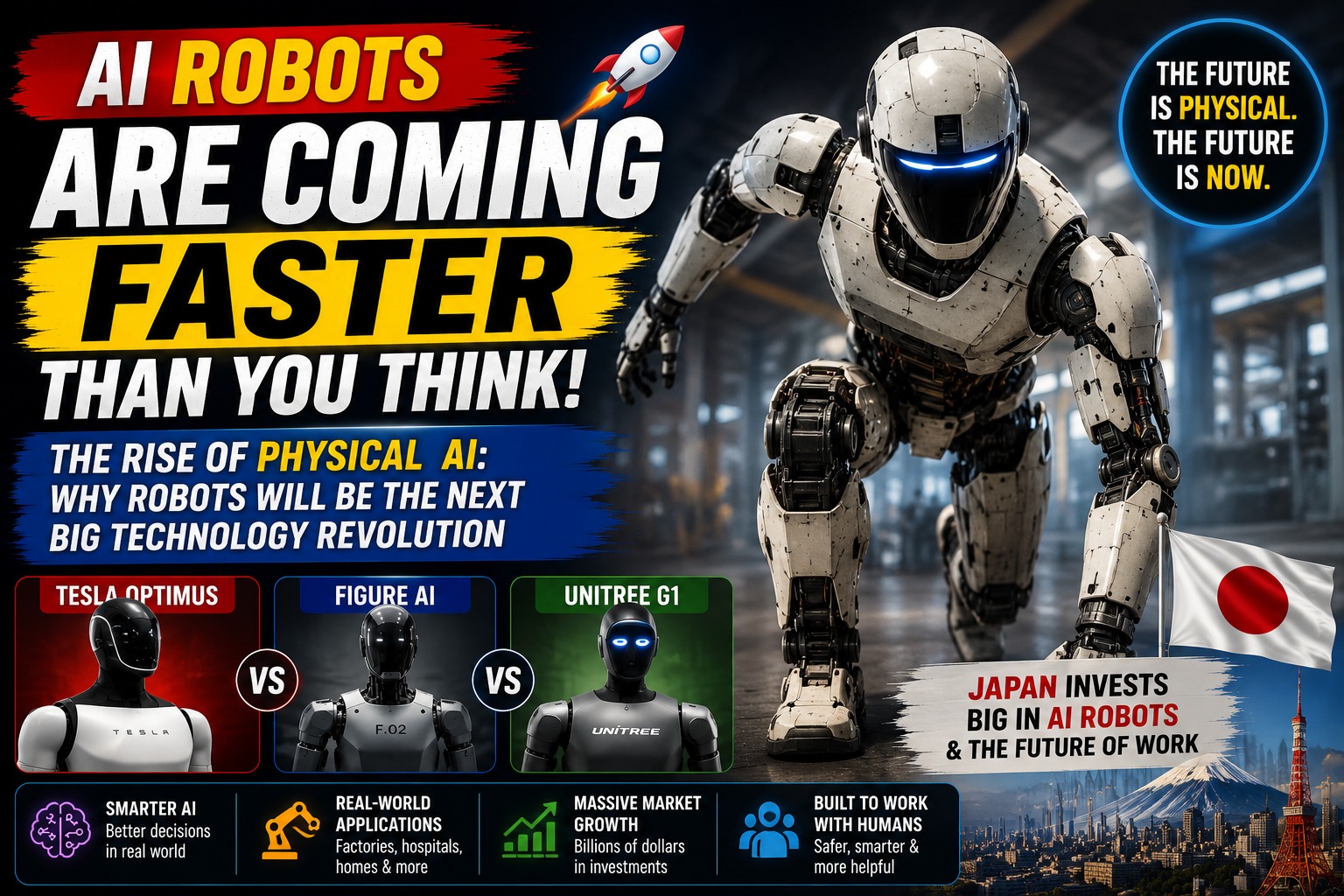
From factory floors to hospitals and homes, AI-powered robots are moving from research labs into real-world applications. Companies like Tesla, Figure AI, Unitree Robotics, and major technology firms in Japan are investing billions of dollars to develop humanoid robots capable of performing everyday tasks. What once seemed like science fiction is rapidly becoming reality.
What Is Physical AI?
Physical AI combines artificial intelligence with robotics, allowing machines to understand their surroundings and perform physical actions. Unlike traditional AI chatbots that exist only in software, Physical AI enables robots to walk, lift objects, recognize people, make decisions, and complete tasks autonomously.
These robots use advanced technologies such as computer vision, machine learning, sensors, and large AI models to continuously learn and adapt. The result is a new generation of intelligent machines designed to work alongside humans rather than simply automate software.
Why the Robotics Industry Is Booming
Several factors are driving the rapid growth of Physical AI.
First, many countries are facing labor shortages, particularly in manufacturing, logistics, healthcare, and elderly care. Humanoid robots can perform repetitive or physically demanding work, helping businesses maintain productivity while reducing workplace injuries.
Second, AI technology has advanced dramatically over the past few years. Modern robots now have better vision systems, faster processors, more natural movements, and improved decision-making capabilities. These improvements make commercial deployment far more practical than ever before.
At the same time, hardware costs are gradually decreasing, making advanced robotics more affordable for businesses and research institutions.
Global Companies Leading the Race
The global competition to build intelligent robots is accelerating.
Tesla continues developing Optimus, a humanoid robot designed for factories, warehouses, and eventually homes. Powered by Tesla’s AI technology, Optimus aims to automate repetitive tasks while working safely alongside people.
Figure AI is focusing on enterprise automation. Its humanoid robot, Figure 02, is already being tested in manufacturing environments through partnerships with major industrial companies. The startup has attracted support from leading technology investors, highlighting strong confidence in the future of humanoid robotics.
Meanwhile, Unitree Robotics is making headlines by producing more affordable humanoid robots such as the Unitree G1, bringing advanced robotics within reach of developers, universities, and businesses.
Japan is also investing heavily in Physical AI through national robotics initiatives that combine AI, semiconductors, and automation. The country’s long-term vision is to deploy intelligent robots across healthcare, manufacturing, public services, and aging-care facilities, strengthening its leadership in robotics innovation.
Industries Ready for Transformation
Physical AI has the potential to reshape multiple industries.
Manufacturing plants could operate with teams of AI-powered robots working around the clock. Warehouses may use humanoid robots for picking, packing, and inventory management. Hospitals could deploy robotic assistants to transport medical equipment or support healthcare workers. In homes, future robots may help with cleaning, cooking, elderly care, and daily assistance.
Rather than replacing every human job, experts believe robots will increasingly handle repetitive, hazardous, or physically demanding tasks, allowing people to focus on creativity, decision-making, and customer interaction.
The Future of Physical AI
Although challenges remain including battery life, affordability, safety, and regulatory oversight the momentum behind Physical AI continues to grow. Improvements in artificial intelligence, robotics hardware, and sensor technology are making robots smarter, more reliable, and increasingly useful.
The race is no longer just about building the most advanced robot. It is about creating intelligent machines that can safely deliver real value in everyday life.
As AI expands beyond software into the physical world, Physical AI could become the next technological revolution—one that changes not only how we work, but how we live.