India’s ancient epic is getting a modern technological transformation. Here’s how VFX, CGI, AI and advanced filmmaking technology are helping bring Ramayana to the global screen.
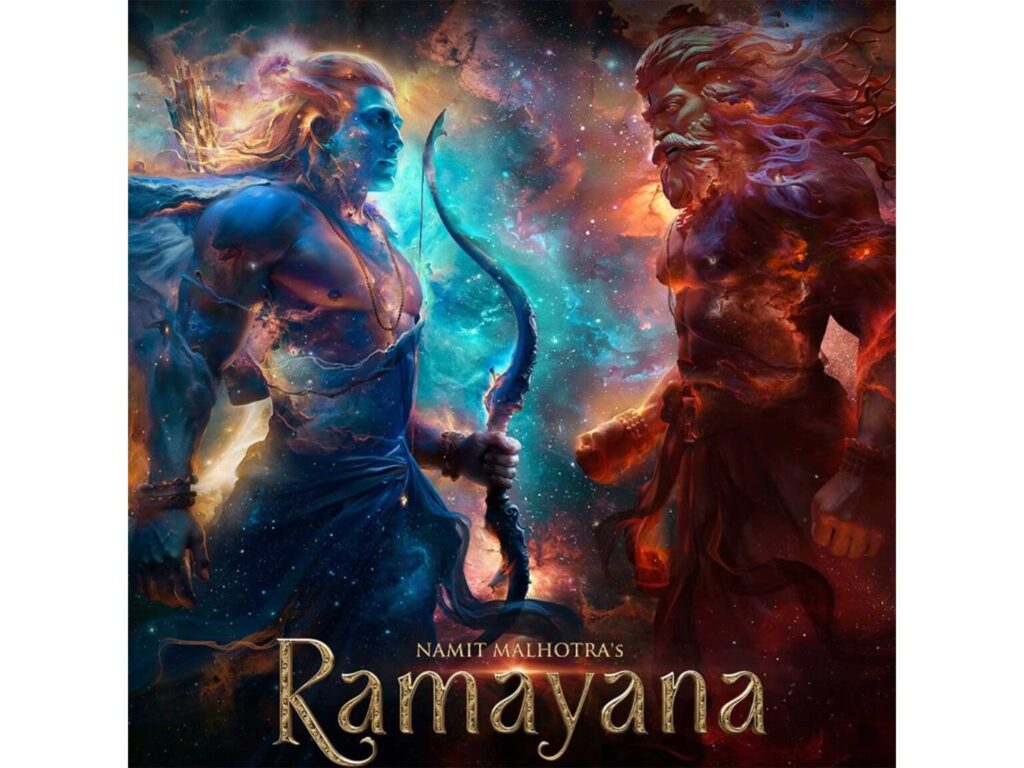
The Ramayana is one of India’s most enduring stories. It has been told for centuries through literature, theatre, television and cinema. But Nitesh Tiwari’s upcoming Ramayana is attempting something significantly different: presenting the epic as a large-scale global cinematic spectacle.
Produced by Namit Malhotra and being created with visual-effects company DNEG and ReDefine, the two-part film is being developed for IMAX and is designed for an international audience. DNEG says the first part is planned for 2026, with the second part following in 2027.
Behind the actors, costumes and enormous sets is another important character in the production: technology.
From computer-generated environments and digital creatures to AI-powered language localisation, modern filmmaking technology is helping filmmakers visualise a world that would be almost impossible to capture entirely with traditional filmmaking techniques.
1. VFX Is at the Heart of the Film
Visual effects, or VFX, are likely to be one of the most important components of Ramayana.
DNEG, the visual-effects company behind films including Dune: Part Two, Oppenheimer and other major Hollywood productions, is handling visual effects for the project. DNEG and ReDefine were announced as the VFX partners for the film.
VFX allows filmmakers to combine footage of real actors with computer-generated environments, creatures, objects and effects.
For a story such as the Ramayana, this can include enormous kingdoms, forests, armies, mythical creatures, flying vehicles and large-scale battles.
Instead of constructing every element physically, artists can build parts of the world digitally and integrate them with live-action footage.
The result is a filmmaking process where the physical and digital worlds become almost indistinguishable.
2. CGI Can Create an Entire Mythological World
Computer-generated imagery, or CGI, is another major technology behind modern epic filmmaking.
Think about the locations described in the Ramayana: Ayodhya, Lanka, forests, mountains, battlefields and other legendary locations.
Building these environments entirely in the real world would require enormous amounts of construction, transportation and logistics.
CGI changes the equation.
Artists can create detailed 3D environments and populate them with buildings, landscapes, vehicles, animals and other elements.
A digital environment can also be modified repeatedly. The lighting, weather, camera position, architecture and atmosphere can all be changed during production or post-production.
This flexibility is especially important for a movie attempting to create a consistent fantasy world across multiple locations and sequences.
3. Digital Creatures Are a Major Challenge
Some of the most technically demanding elements of a mythological movie are not buildings or landscapes — they are living creatures.
Characters such as Jatayu, large groups of animals and other mythological beings require artists to reproduce realistic movement, skin or feather detail, lighting, shadows and interaction with the surrounding environment.
Modern creature VFX combines several disciplines:
- 3D modelling
- Digital sculpting
- Texturing
- Rigging
- Character animation
- Hair and fur simulation
- Lighting
- Rendering
- Compositing
The goal is not simply to make a digital creature look impressive.
It has to behave like a real creature.
Its movement must respond to gravity, its environment and the camera. Lighting must match the surrounding scene, while shadows and reflections need to behave correctly.
That is what separates convincing CGI from something that simply looks computer-generated.
4. AI Is Helping Solve the Language Barrier
One of the most interesting technological aspects of Ramayana is not its visual effects — it is its approach to language localisation.
The filmmakers want the movie to work for international audiences, and AI is being used to help solve one of cinema’s oldest problems: keeping lip movements natural when a film is dubbed into another language.
DNEG’s Brahma AI technology is being used for syncing technology that can adapt facial lip movements to localised dialogue. Namit Malhotra has discussed the technology as part of the film’s global strategy.
The technology became particularly visible with the English-language trailer released in August 2026, where reports highlighted AI-powered lip-sync technology known as Brahma AI.
Traditionally, when an actor speaks Hindi and the movie is dubbed into English, Spanish or another language, the audio changes but the actor’s mouth movements remain synchronized to the original dialogue.
That can create an obvious mismatch.
AI-powered lip synchronisation attempts to reduce that problem by adjusting the visible mouth movements so they correspond more naturally with the new dialogue.
Why this matters
This could be extremely important for an Indian film targeting a global audience.
Instead of international viewers constantly noticing that the dialogue and mouth movements do not match, localization technology can make the experience feel more natural.
Brahma AI’s own platform describes its Vaani technology as enabling lip-synced localization and voice-related workflows across languages.
This makes Ramayana an interesting case study in how AI can be used not necessarily to generate an entire movie, but to enhance a traditional filmmaking workflow.
5. Virtual Production: The Next Step in Digital Filmmaking
Virtual production has transformed how many modern blockbuster films are made.
Instead of filming actors exclusively against traditional green screens, filmmakers can use LED walls and real-time digital environments to surround performers with virtual locations.
This approach can provide several advantages.
Actors can see the environment around them. Cinematographers can work with lighting that matches the virtual environment. Directors can view a much closer approximation of the final shot while filming.
However, it is important to distinguish between technology that is confirmed for Ramayana and technology that is simply relevant to the film’s type of production.
Publicly available official information confirms DNEG’s involvement and the film’s large-scale VFX approach, but detailed technical information about exactly how much LED-volume or Unreal Engine-based virtual production is being used has not been publicly disclosed by the filmmakers.
That distinction matters because online discussions often present assumptions about a film’s production pipeline as confirmed facts.
6. Previsualization Helps Plan Massive Scenes
Before a complicated VFX sequence is filmed, filmmakers can create a digital version of the scene.
This process is known as previsualization, or previs.
Imagine planning a massive battle involving hundreds or thousands of characters.
Rather than discovering problems after filming, filmmakers can digitally plan:
- Camera movements
- Character positions
- Battle formations
- Lighting
- Set layouts
- Action choreography
- Timing
- Visual effects
The director and VFX team can then determine what needs to be filmed physically and what can be created digitally.
For a movie as complex as Ramayana, this type of planning can potentially save enormous amounts of time and reduce expensive mistakes.
7. IMAX Raises the Technical Requirements
The film is being created for IMAX, which makes visual quality even more important.
DNEG’s official announcement states that Ramayana is being filmed for IMAX.
Large-format cinema exposes details that may not be as noticeable on smaller screens.
That means filmmakers and VFX artists need to pay attention to:
- Texture quality
- Facial details
- Digital environments
- Lighting
- Shadows
- Particle effects
- Creature animation
- Rendering quality
- Compositing
A visual effect that looks acceptable on a small display can look noticeably artificial when projected on a huge cinema screen.
8. Rendering: Where All the Digital Pieces Come Together
After artists create a 3D environment or character, the computer still has to calculate how that object should look in the final frame.
This is called rendering.
A renderer calculates things such as:
- Light
- Reflections
- Shadows
- Materials
- Depth
- Atmospheric effects
- Camera perspective
- Surface details
A complex blockbuster shot can contain millions of digital elements and enormous amounts of data.
Multiply that by thousands of frames and the computational requirements become massive.
This is why large VFX productions rely on powerful rendering infrastructure and highly optimized production pipelines.
9. The Human Element Still Matters
Despite all this technology, Ramayana is not being created by AI alone.
Technology is a tool.
Artists, animators, cinematographers, VFX supervisors, directors, actors, stunt teams, editors and sound designers still make the creative decisions.
DNEG’s involvement brings experience from large international productions, while the project also brings together Indian filmmakers and global creative talent. The production has been positioned as an international-scale adaptation rather than simply another domestic mythological movie.
This is perhaps the most important lesson from modern filmmaking:
The future of cinema isn’t necessarily humans versus technology. It is humans using technology to achieve things that were previously impossible.
10. Why Ramayana Could Be Important for Indian Cinema
The technological ambition of Ramayana goes beyond one movie.
India already has a large and rapidly developing VFX industry. But projects that combine enormous budgets, international VFX expertise, large-format filmmaking and AI-powered localization can push the industry into new territory.
The film could demonstrate how Indian stories can be packaged technologically for audiences across the world.
The use of AI localization is particularly interesting because language has traditionally been one of the biggest barriers to international distribution.
If audiences in different countries can experience the performances with more natural lip synchronization, Indian films could potentially become easier to export without losing their original cultural identity.
The Future of Indian Cinema Is Becoming More Digital
The Ramayana project represents a fascinating intersection of ancient storytelling and modern technology.
An epic that originated thousands of years ago is being translated into a modern cinematic language using technologies such as:
VFX + CGI + AI localization + digital environments + advanced rendering + modern cinematography + large-format cinema.
Not every technology discussed online has been officially confirmed as part of the film’s production pipeline, particularly specific virtual-production tools or individual software platforms. But the confirmed involvement of DNEG, ReDefine, IMAX and Brahma AI already demonstrates the project’s strong technological foundation.
The bigger story is not simply whether Ramayana can match Hollywood visually.
It is whether Indian filmmakers can combine India’s stories, global filmmaking talent and cutting-edge technology to create a new model for Indian cinema.
And if Ramayana succeeds, its influence could extend far beyond the film itself.