A leadership chapter is coming to an end at one of India’s most respected business groups.
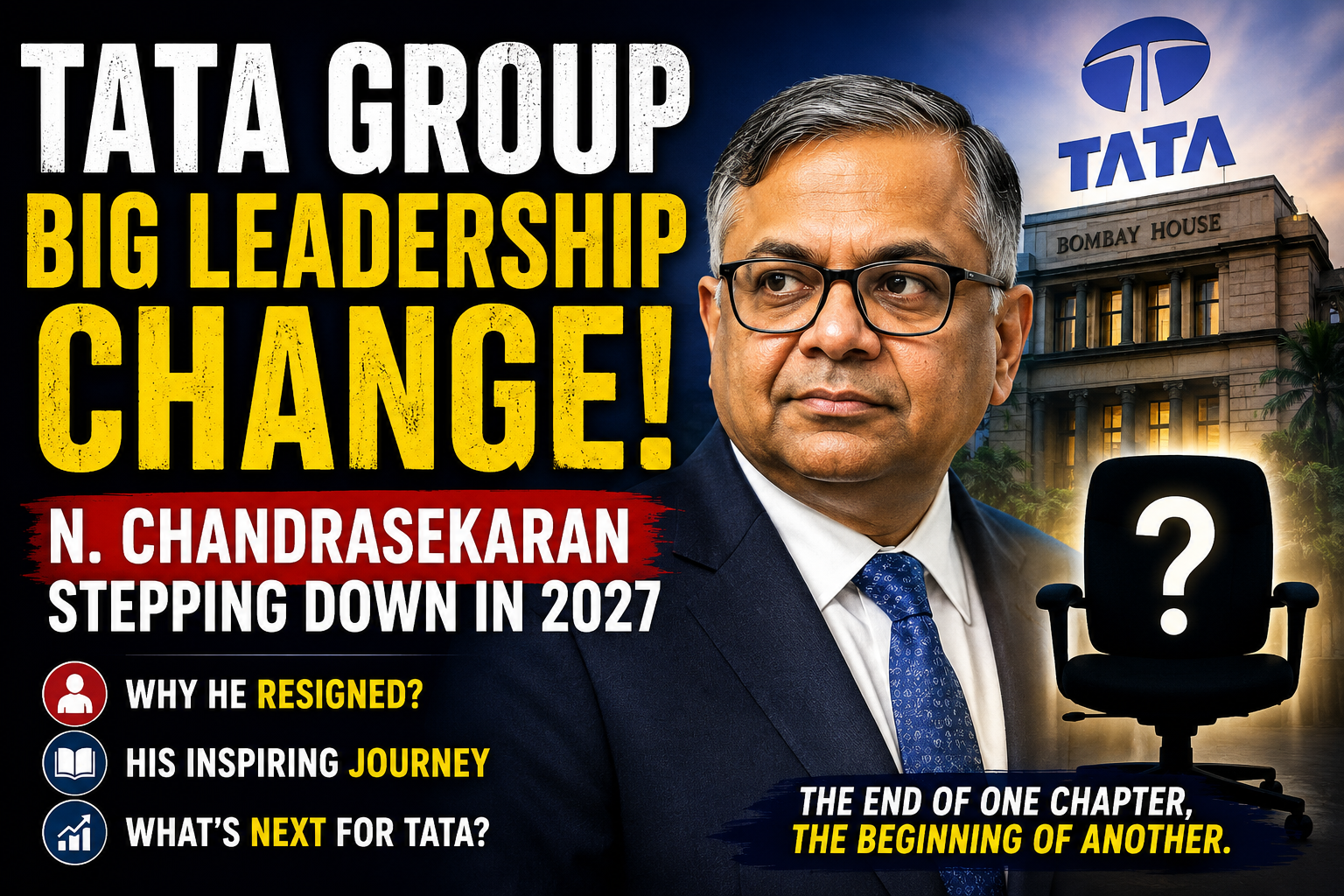
On August 12, 2026, N. Chandrasekaran announced that he would not seek reappointment as Chairman of Tata Sons when his current term ends in February 2027. Although the headline was quickly described as a “resignation”, the situation is slightly more nuanced: Chandrasekaran will continue through his existing term rather than leaving the group immediately.
The announcement has created uncertainty around the future leadership of the Tata Group. More importantly, it has reopened an old question inside the Tata empire: who should control the direction of the group — professional management or the Tata Trusts?
Reports indicate that differences between Chandrasekaran and Tata Trusts Chairman Noel Tata played a major role in the decision. Sources have also pointed to a lack of support for extending Chandrasekaran’s tenure. At the same time, questions surrounding Tata Sons’ future structure, governance and strategic priorities have added to the tension.
For investors, the timing is significant. Tata Group companies are simultaneously dealing with enormous opportunities and challenges — from Air India and electric vehicles to semiconductors, artificial intelligence and global expansion.
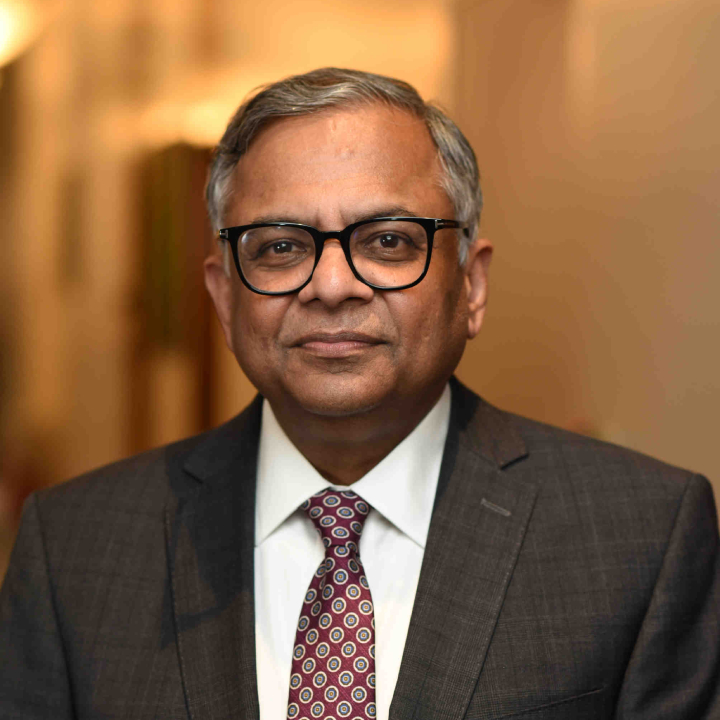
So, who exactly is N. Chandrasekaran, and how did a man who started his career inside TCS eventually become the person sitting at the top of the Tata empire?
From a Small Town in Tamil Nadu to the Top of Tata
The story of Natarajan Chandrasekaran is different from the traditional Tata leadership story.
He was not born into the Tata family.
He did not come from one of India’s famous industrial dynasties.
Instead, his journey began in Tamil Nadu.
Chandrasekaran studied applied sciences at Coimbatore Institute of Technology and later completed a Master of Computer Applications from Regional Engineering College, Tiruchirappalli, now NIT Trichy.
His career eventually brought him into Tata Consultancy Services.
That decision would change everything.
The Man Who Grew With TCS
Chandrasekaran joined TCS in the 1980s and spent decades climbing through the organisation.
He experienced the transformation of India’s IT industry from the inside.
During those years, Indian technology companies were moving from relatively small software-service businesses to global technology giants. TCS was becoming one of India’s most important technology companies, and Chandrasekaran grew along with it.
He moved through several leadership positions before becoming CEO of TCS in 2009.
Under his leadership, TCS strengthened its global position and became one of the world’s largest IT services companies.
For Chandrasekaran, the Tata Group was no longer simply an employer.
It had become the organisation around which his entire professional life had been built.
He had spent roughly three decades inside TCS before being asked to take on a much bigger challenge.
2017: The Unexpected Rise to Tata Sons
Then came one of the most dramatic periods in Tata’s modern history.
In 2016, Cyrus Mistry was removed as Chairman of Tata Sons, triggering one of the most closely watched corporate battles in India’s history.
Ratan Tata returned temporarily as chairman while the Tata Group searched for a permanent successor.
In January 2017, the answer arrived.
N. Chandrasekaran was selected as the new Chairman of Tata Sons.
His appointment was historic.
He became the first professional executive from outside the Tata family and the first non-Parsi to lead the group.
The man who had spent decades building a career in India’s technology industry was now responsible for one of India’s largest and most diversified business empires.
Nine Years of Transformation
Chandrasekaran’s tenure was not simply about maintaining the Tata Group.
It was about making the group bigger, more global and more technologically ambitious.
During his leadership, Tata expanded aggressively across several industries.
Tata acquired and expanded businesses in areas such as aviation, electric vehicles, electronics and semiconductors.
One of the biggest moves was the acquisition of Air India.
The Tata Group’s return to the airline business was more than a normal corporate acquisition. Air India had originally been founded by Tata before being nationalised by the Indian government decades earlier.
Bringing Air India back into the Tata family therefore carried both financial and emotional significance.
Chandrasekaran also pushed Tata towards new technology-focused businesses.
The group began investing heavily in semiconductor manufacturing, electronics production, artificial intelligence and data centres.
At the same time, Tata Motors continued expanding its electric vehicle ambitions, while Tata Consultancy Services remained one of the group’s most important businesses.
In many ways, Chandrasekaran attempted to transform Tata from a traditional conglomerate into a more technology-driven global corporation.
But Success Came With New Problems
The bigger Tata became, the more complicated its leadership became.
The group was simultaneously managing businesses in automobiles, IT, steel, aviation, retail, hotels, electronics, consumer products and financial services.
Some investments delivered strong results.
Others created major challenges.
Air India required enormous investment and a long-term turnaround.
Jaguar Land Rover faced global automotive pressures and supply-chain challenges.
The group’s e-commerce ambitions also faced a highly competitive market.
At the same time, TCS — traditionally one of the strongest jewels in the Tata crown — faced changing conditions in the global IT industry.
This meant Chandrasekaran’s final years were very different from his early years at Tata Sons.
The challenge was no longer simply growth.
It was deciding where Tata should place its biggest bets for the next decade.
The Real Issue Behind the Exit
This is where the current controversy begins.
Chandrasekaran’s official position is that he will not seek another term.
But behind that announcement is a much larger governance question.
Tata Sons is controlled by Tata Trusts, which hold a dominant stake in the holding company.
Noel Tata, Ratan Tata’s half-brother, became Chairman of Tata Trusts in 2024.
Reports indicate that differences developed between Chandrasekaran and Noel Tata over the future direction of the group and his continuation as chairman.
One important issue reportedly involved the future structure and possible public listing of Tata Sons.
There were also concerns about whether Chandrasekaran had sufficient board support for another term.
It is important to separate confirmed facts from speculation: Tata has not publicly described every internal disagreement in detail, and many reports about the exact nature of the dispute come from sources familiar with the matter.
What is clear is that Chandrasekaran decided not to seek another term.
And that decision has immediately turned the spotlight towards Tata’s succession.
Why Investors Are Watching Closely
The stock market reacted quickly to the news.
Shares of several Tata Group companies fell after Chandrasekaran’s announcement, reflecting investor concerns about leadership uncertainty.
That reaction is understandable.
The Tata Group is not a single company.
It is an ecosystem of major businesses.
A change at Tata Sons can influence how investors think about the strategic direction of the wider group.
However, it is equally important to remember that Tata’s individual operating companies have their own professional management teams and boards.
Tata Motors, for example, has said that its investment plans and broader strategy remain unchanged despite the upcoming leadership transition at Tata Sons.
This means the immediate operational impact may be limited.
The bigger question is what happens at the strategic level.
What Happens After Chandrasekaran?
Tata Trusts has indicated that a selection panel will recommend the next Chairman of Tata Sons.
That search could become one of India’s most closely watched corporate leadership processes.
The next chairman will inherit an extraordinary situation.
On one side, Tata has enormous opportunities.
1. Semiconductors
India wants to become a major semiconductor manufacturing hub, and Tata has already entered the sector.
Its semiconductor ambitions could become one of the group’s most important long-term businesses.
2. Air India
Air India requires significant investment and operational transformation.
The next chairman will have to decide how aggressively Tata should invest in building a globally competitive airline group.
3. Electric Vehicles
Tata Motors has become one of India’s strongest electric vehicle players.
The transition towards EVs, batteries and connected vehicles could become a major source of growth.
4. Artificial Intelligence
AI is changing the technology industry at extraordinary speed.
TCS, Tata Communications and other Tata companies have significant exposure to this transformation.
The next Tata leadership team will have to decide how deeply the group wants to compete in AI infrastructure, services and applications.
5. Global Expansion
Tata is no longer only an Indian conglomerate.
Through businesses such as TCS, Tata Motors and Jaguar Land Rover, its future is increasingly global.
The next chairman will therefore have to balance Indian growth with international competition.
The Bigger Question: Who Will Lead Tata?
The most important question is not simply “Who replaces Chandrasekaran?”
It is:
What kind of Tata Group does the next chairman want to build?
Chandrasekaran represented the rise of professional management.
His successor will inherit the same complex relationship between Tata Sons, Tata Trusts and the individual operating companies.
The next chairman will need to maintain investor confidence while also preserving the values that have made the Tata name different from many other conglomerates.
That balance will not be easy.
The End of One Chapter, Not the End of Tata
N. Chandrasekaran’s journey from a technology professional in Tamil Nadu to the chairman of Tata Sons is remarkable.
He entered TCS as a young professional.
He rose to become its CEO.
Then, in 2017, he walked into Bombay House as the person responsible for leading the entire Tata Group.
For nearly a decade, he helped push Tata into new industries and new markets.
Now, another chapter is beginning.
His departure does not mean Tata is in crisis.
But it does mean Tata is approaching one of its most important leadership transitions in years.
The group have huge projects ahead — semiconductors, electric vehicles, Air India, AI, electronics and global expansion.
The next chairman will inherit not only a massive business empire but also a legacy that stretches back more than a century.
And perhaps that is the real challenge.
The next leader of Tata will not simply have to manage companies. They will have to decide what Tata should become in the next 100 years.