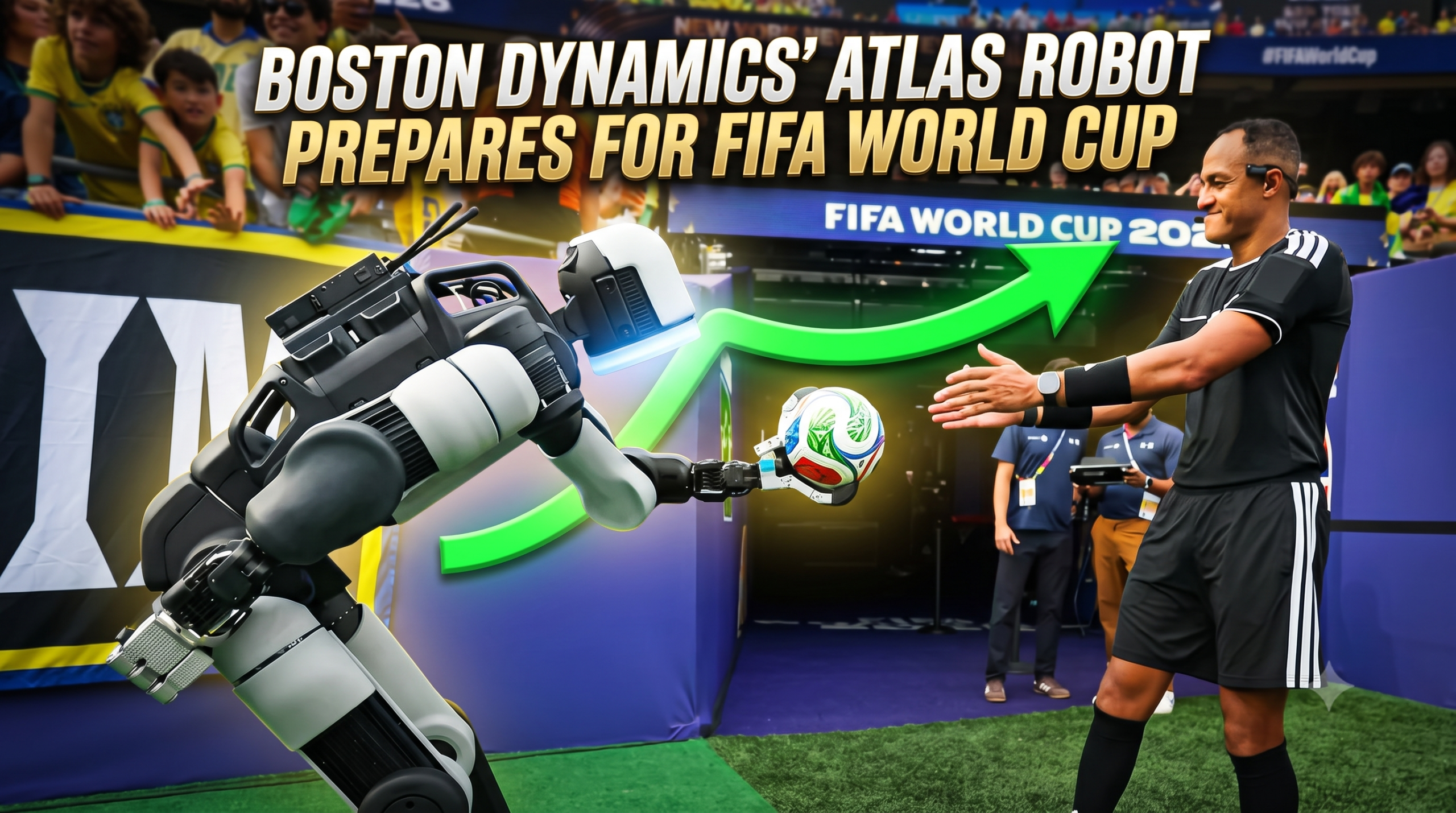
Boston Dynamics’ Atlas humanoid robot is preparing for the FIFA World Cup, showcasing advanced AI, robotics, and automation technology.
The FIFA World Cup 2026 isn’t just about football—it’s also becoming a global stage for cutting-edge technology. One of the most exciting developments comes from Boston Dynamics, whose advanced humanoid robot Atlas is reportedly preparing for demonstrations connected to the tournament.
Known for its incredible agility, balance, and AI-powered movement, Atlas has become one of the world’s most advanced humanoid robots. Its participation highlights how robotics and artificial intelligence are moving beyond research labs and into major international events.
This development reflects the growing role of AI in sports, entertainment, logistics, and public engagement.
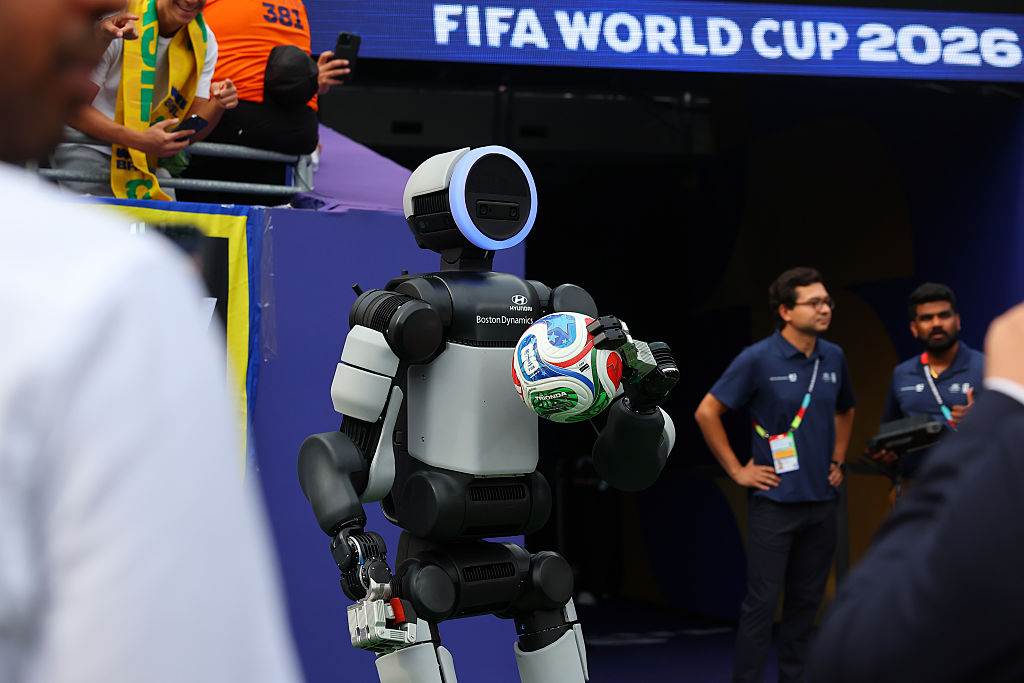
What Is Boston Dynamics’ Atlas Robot?
Atlas is a fully electric humanoid robot developed by Boston Dynamics. Designed to perform complex physical tasks, Atlas combines artificial intelligence, computer vision, advanced sensors, and precision control systems to navigate real-world environments.
Unlike traditional industrial robots that operate in fixed locations, Atlas is capable of dynamic movement, including:
- Running
- Jumping
- Climbing stairs
- Balancing on uneven terrain
- Performing backflips
- Manipulating objects with precision
Its advanced mobility makes Atlas one of the most sophisticated humanoid robots ever built.
Why Is Atlas Preparing for the FIFA World Cup?
The FIFA World Cup attracts billions of viewers worldwide, making it an ideal platform to showcase the latest innovations in robotics.
Boston Dynamics is expected to demonstrate Atlas in activities that highlight:
- Human-like mobility
- AI-powered decision-making
- Autonomous navigation
- Interactive public demonstrations
- Future applications in sports and entertainment
Although Atlas is not replacing players or referees, its presence demonstrates how robotics can enhance large-scale sporting events.
How Artificial Intelligence Powers Atlas
Atlas relies on several advanced AI technologies working together in real time.
Computer Vision
Atlas continuously scans its surroundings using cameras and depth sensors to understand obstacles and pathways.
Machine Learning
AI algorithms allow the robot to improve movement patterns and adapt to changing environments.
Motion Planning
Sophisticated software calculates thousands of possible movements every second, helping Atlas maintain stability while walking, running, or carrying objects.
Real-Time Decision Making
Atlas processes environmental data instantly, allowing it to respond safely to unexpected situations.
Why This Matters for the Future of Robotics
The Atlas demonstration represents more than a technological showcase.
It signals a future where humanoid robots become practical tools capable of working alongside people rather than replacing them entirely.
As AI continues advancing, robots are becoming:
- Faster
- Smarter
- More adaptable
- More energy efficient
- Safer around humans
This progress could transform industries ranging from construction and healthcare to logistics and public safety.
Final Thoughts
Boston Dynamics’ Atlas robot preparing for FIFA World Cup demonstrations showcases how artificial intelligence and robotics are rapidly entering mainstream society.
While Atlas remains primarily a research platform, its remarkable capabilities provide a glimpse into a future where intelligent humanoid robots assist people across countless industries.
As AI, machine learning, and robotics continue advancing together, innovations like Atlas are helping shape a smarter, more automated world—one that extends far beyond the football field.